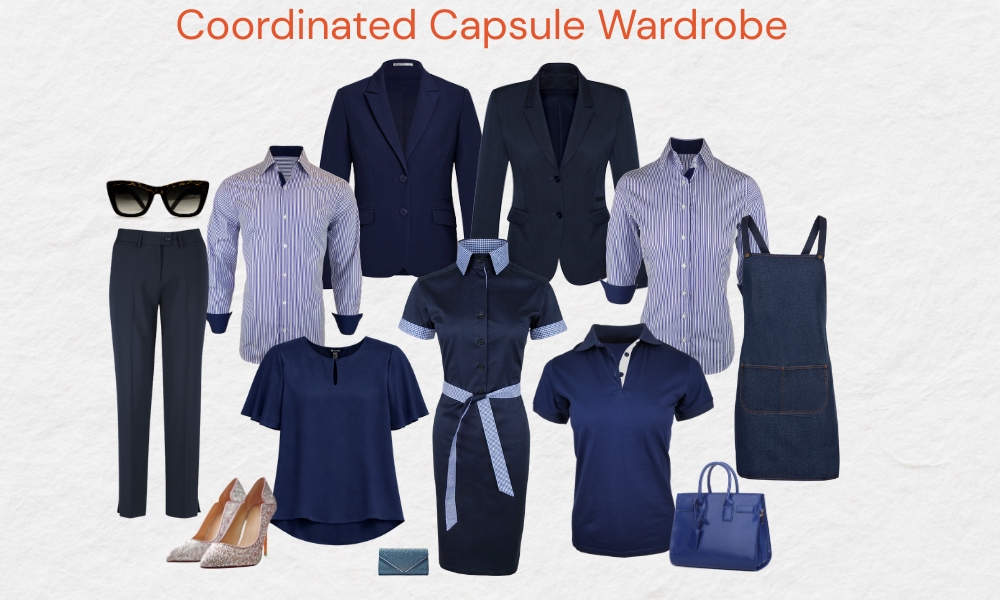
More companies are beginning to rethink their workplace uniforms and explore more flexible options for their teams. Some are flipping the entire idea on its head and moving towards a “capsule wardrobe” instead of a strict uniform. But here’s a question, could a coordinated capsule wardrobe be the smarter way to create a branded and comfortable look? For a very long time, uniforms followed a simple rule everyone wore the same shirt, the same trousers, and the same colours every single day. It created a neat and consistent image for the business, but was it always the most practical option for the people wearing them? Not necessarily. Traditional uniforms can feel rigid and limiting, especially during a full workday filled with meetings, movement, and different tasks. Because of this, many businesses are starting to rethink the way workplace uniforms are designed.
What happens when companies begin asking a different question – Does a uniform really have to be just one fixed outfit? This is where the idea of a coordinated capsule wardrobe comes in. Instead of providing a single uniform, employees are given a small collection of clothing that are designed to work well together. Staff can mix and match these items while still maintaining a professional and cohesive look that represents the brand. The result is a team that still appears polished and consistent, but with clothing that feels far more comfortable, flexible, and natural to wear every day. But how do we really understand the value of a coordinated capsule wardrobe, and what benefits can it bring to both businesses and employees? Let’s take a closer look.
 1. What Is a Coordinated Capsule Wardrobe?
What is a coordinated capsule wardrobe, and why are more businesses talking about it? Simply put, it’s a small collection of clothing that is carefully chosen so they work well together. Instead of giving employees one strict uniform, companies provide a few essential items that can easily be mixed and matched. Each piece complements the others in colour, style, and fit, allowing staff to create different outfits while still maintaining a professional and consistent look as a team.
But why does this approach work so well? One reason is flexibility. Employees can rotate outfits throughout the week without the team looking mismatched or uncoordinated. For example, an employee might wear navy trousers with a cream blouse on Monday, then pair the same trousers with a soft knit or shirt the next day. The pieces change, but the overall look still feels polished and professional. Everyone still represents the brand, but they also have a little more freedom in how they dress each day. The idea comes from personal fashion, where capsule wardrobes have been popular for years because they focus on simplicity, versatility, and timeless pieces. When the same concept is applied to workplace uniforms, it helps create a balance between professionalism, comfort, and practicality something many modern workplaces are now starting to value.
2. A Simple Structure That Works
One of the reasons capsule wardrobes work so well for workplace uniforms is their simplicity. But how simple can it really be? In many cases, businesses build their capsule uniform around a small set of versatile pieces that employees can wear in different combinations throughout the week.
A common approach is to provide around five to five key items per employee each year. At first, that might sound very little. But when the pieces are carefully chosen, those items can create many different outfit combinations. This allows employees to change their look during the week while keeping a consistent and professional style.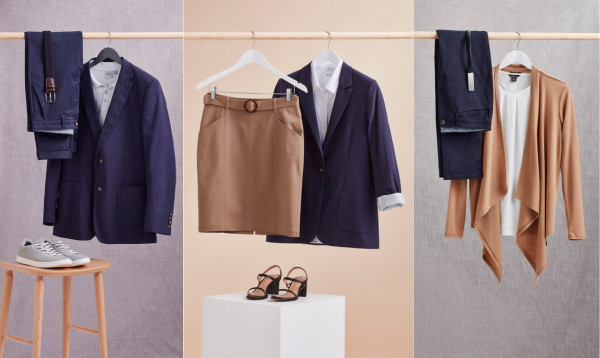
For example, a typical capsule structure might look like this:
Bottoms
- Three pairs of trousers or skirts per person
- Two coordinated colour options, such as camel and navy
Tops
- Three tops that complement the bottoms
- Neutral tones that mix easily across the range
Layering piece
- A knit, cardigan, or lightweight jacket for cooler seasons
What does this look like in everyday work life? An employee might wear navy trousers with a soft white blouse on Monday, then pair the same trousers with a different top or knit the next day. The outfit changes, but the overall look still feels polished and consistent with the brand.
For businesses, this structure also makes managing uniforms much easier. Instead of replacing full outfits, individual pieces can simply be reordered when needed. It’s a practical system that keeps the team looking professional while giving employees clothing that feels comfortable and easy to wear.
3. The Look: Smart Casual and Timeless
What style works best for a capsule uniform? We believe it’s the smart, casual look that businesses are now choosing.. Why? Because it offers the right balance between professionalism and comfort. Employees still look polished and presentable, but they can also move freely and feel comfortable throughout a busy workday. Think about a typical day at work, one moment someone might be meeting a client, the next they could be walking through a showroom, attending a supplier meeting, or preparing for a trade event. In between, there are everyday office tasks that require clothing that feels practical and easy to wear. This is why a smart casual approach fits so well in modern workplaces.
Instead of relying on formal pieces, the focus shifts to clean lines, simple shapes, and fabrics that allow for movement. You might see tailored trousers paired with a soft knit, or a structured shirt worn with a lightweight jacket. The goal is to maintain a professional look without feeling overly formal. Another common question businesses ask is whether uniforms should include bold patterns or strong designs. In many cases, the answer is no. Simple, well-made pieces in neutral tones often work best because they feel more timeless, easier to combine with other items, and much more comfortable for employees to wear regularly.
 4. Colour Palettes That Feel Warm and Modern
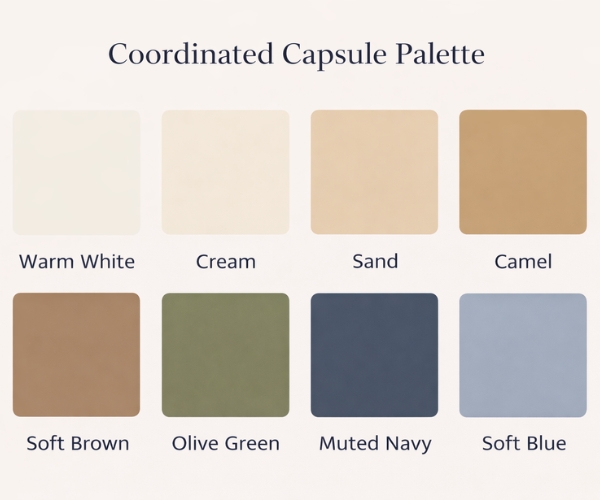
Do you ever think about how important colour is in a capsule wardrobe? Color actually plays a bigger role than many people realise. When a wardrobe is built around pieces that need to mix and match easily, the colour palette becomes the foundation that makes everything work. If the colours don’t complement each other, it becomes harder to create outfits that look balanced and professional. This is why many organisations carefully choose colours that naturally blend well together, so employees can combine different pieces without worrying too much about whether the outfit works. Before, most workplace uniforms relied heavily on darker tones like black, navy, and grey. While these colours still look professional, they can sometimes feel a little too formal or heavy for everyday wear.
Some colours that are becoming increasingly popular include:
- Sand
- Camel
- Olive green
- Cream
- Warm white
- Soft browns
- Muted navy and blues
Why are these colours gaining attention? One reason is that they work well together. These shades naturally complement one another, which makes it easier for employees to mix and match different pieces. When the colour palette is carefully chosen, staff don’t have to worry about whether their outfit works or not. Everything blends naturally, creating a wardrobe that feels cohesive, balanced, and easy to wear throughout the workday.
5. A More Subtle Approach to Branding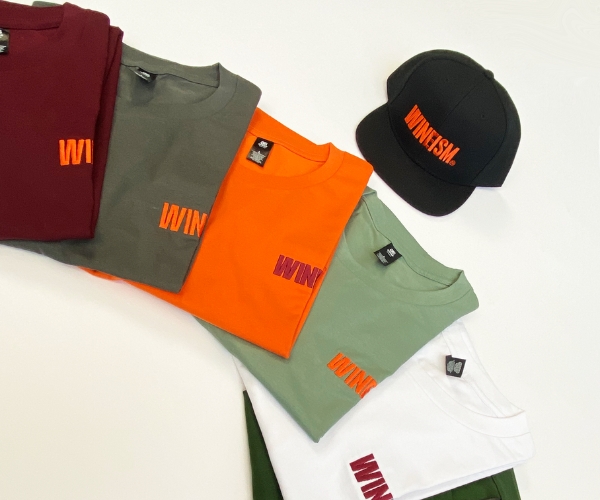
Branding is another part of workplace uniforms that is slowly changing. But here’s a question many businesses are now asking, does every uniform really need a large logo to represent the brand? The answer is no, not always. Before, it was very common to see big logos on almost every garment. Many companies believed this was the best way to make the brand visible. While that can work, large logos can sometimes make the uniform feel overwhelming or too promotional rather than something employees enjoy wearing.
Since capsule uniforms are made up of a small collection of mix-and-match pieces, the focus often shifts toward thoughtful design rather than heavy branding. Instead of large logos, many businesses now prefer subtle details such as:
- A discreet embroidered logo
- Digital transfers on tees and polos
- Minimal branding on select pieces
How does the brand still stand out? Often through the overall design of the clothing. The colour palette, fit, and style of the garments can reflect the brand’s identity. For example, a company might use its signature colours across the capsule pieces or choose clean, modern styles that represent the brand’s image. When everything works together, the brand is still clearly represented just in a more natural and refined way.
 6. Practical Details That Matter
Of course, style is only one part of a successful uniform program. But what about the practical side? After all, uniforms are worn for long hours during the workday. Employees move around, meet clients, attend meetings, and handle different tasks. Therefore, it’s only fair to ask: will the clothing still be comfortable and easy to manage throughout the day?
This is why many businesses also focus on practical details when planning their uniforms. They often look for garments that offer:
- Easy-care fabrics that are simple to wash and maintain
- Durable materials that keep their shape and colour over time
- Reliable stock availability for future orders
- Inclusive sizing options for different body types
- The ability to reorder individual pieces when needed
These details may seem small, but they make a big difference over time, especially for organisations with larger teams or multiple locations. When uniforms are practical, easy to maintain, and comfortable to wear, employees are much more likely to feel confident and positive about wearing them every day.
7. A More Flexible Way to Dress a Team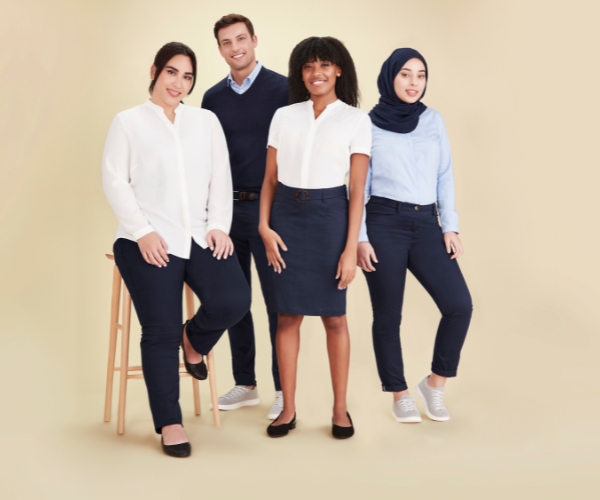
What do you think will happen when businesses start to rethink the traditional uniform? When businesses start to rethink the traditional uniform, they often discover more flexible and modern ways for teams to dress while still looking professional and consistent. Instead of strict dress codes or identical outfits for everyone, many organisations are exploring a more flexible approach through the coordinated capsule wardrobe. Rather than giving employees one fixed uniform, companies provide a small collection of clothing pieces that naturally work well together. Staff can mix and match these items while still looking coordinated and professional as a team. For example, someone might wear tailored trousers with a soft knit one day, and the same trousers with a structured shirt the next. Even though the outfits change, the overall look still feels consistent because the colours and styles are designed to work together.
So why does this approach work so well? Simply because it gives employees more comfort and flexibility while still maintaining a strong brand image. People can dress in a way that feels practical for their day while still representing the company professionally. As workplace culture continues to move toward more modern and practical solutions, capsule wardrobes are becoming an appealing option for many organisations. For businesses looking to update their uniform programs, this approach creates a thoughtful balance between brand consistency, practicality, and clothing that employees genuinely feel comfortable wearing every day.
