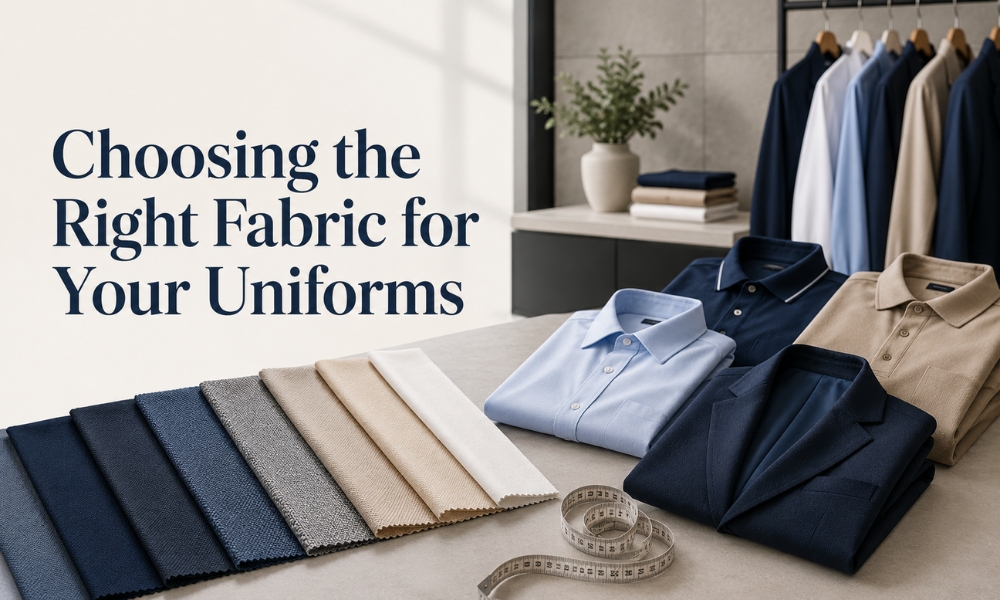
When you think about creating a uniform, your focus often goes on the colour, the logo, the fit, and the overall look — and of course, these things matter. Ask someone who wears a uniform every day, or someone who truly understands workwear, and they’ll tell you the real difference comes down to the fabric. Aside from how a uniform looks, how it feels often impacts how it performs. A uniform can look great, but if it’s too hot, too stiff, or uncomfortable to wear for long hours, people will notice that more. The fabric is what your team experiences every day. It affects their comfort, how they move, and even how confident they feel at work. So, while design and colour catch attention, in the long run, it’s the fabric that really matters.
If you’re looking into this for your business, here are six simple tips that can help you choose the right fabric.
1. Why Fabric Choice Matters
Have you ever bought something because it looked great, but once you wore it, it just didn’t feel right? Maybe it was too hot, too stiff, or just uncomfortable after a few hours. This is exactly why choosing the right fabric really matters. A lot of people experience this, and when it comes to uniforms, it can affect how your staff works. Imagine wearing a thick, heavy shirt in a warm environment, or a stiff fabric that makes it hard to move around. It gets distracting, uncomfortable, and can even slow someone down during a busy day.
For example, a retail staff member standing all day in a non-breathable fabric might feel overheated, while someone in hospitality wearing a stiff uniform might struggle to move quickly and comfortably. These small things may seem minor, but they make a big difference over time. That’s why it’s important not to focus only on how a uniform looks. It’s just as important to think about how it feels and how it performs day to day.
2. Common Types of Uniform Fabrics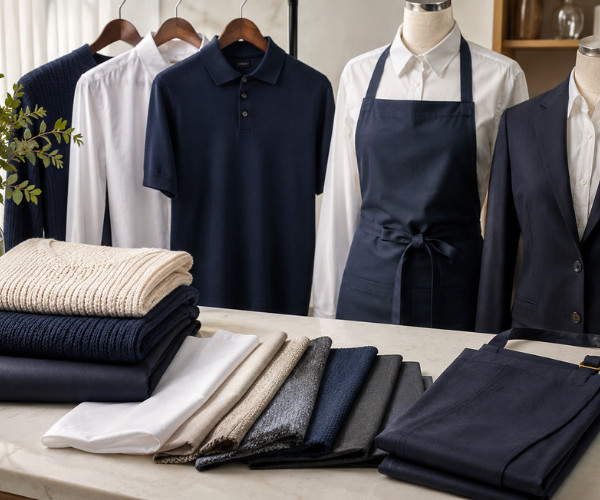
Choosing the right fabric can feel a bit confusing at first. There are a lot of options out there, but most uniforms are usually made from a few common fabric types. Cotton is one of the most popular choices. It’s soft, breathable, and comfortable to wear, especially in warmer environments or for customer-facing roles. You’ll often see cotton used in uniforms like casual office shirts, retail polos, or café staff wear. The downside is that it can wrinkle easily and may not last as long with heavy use. Polyester, on the other hand, is known for being strong and reliable. It holds its shape, resists wrinkles, and handles frequent washing well, which is why it’s commonly used in hospitality uniforms, housekeeping, healthcare scrubs, and corporate wear.
Then there are fabric blends, which combine cotton and polyester to give you both comfort and durability. These are great for everyday uniforms like office wear, front desk outfits, or team polos. You’ll also come across performance fabrics, designed for more active roles. They help keep the body cool, dry quickly, and allow more movement, perfect for fitness staff, warehouse teams, or roles that require a lot of movement. There’s no one perfect fabric, it really depends on your team, your work environment, and how the uniform is used.
 3. Choosing Fabric Based on Your Work Environment
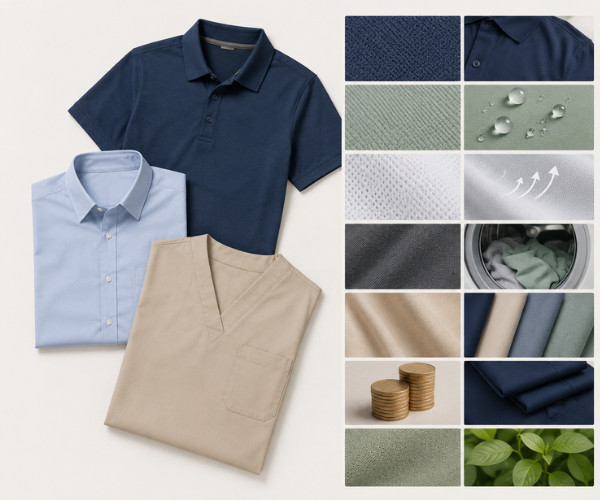
One of the most common mistakes businesses make is choosing a fabric based on how it looks, rather than where it will be worn. What works well in an air-conditioned office might not work at all in a busy kitchen or outdoor setting. For example, a thick or heavy fabric might look polished, but it can feel too hot and uncomfortable in warmer environments.
For outdoor teams or roles exposed to heat, breathable and lightweight fabrics are a better choice. They help keep staff cool and comfortable throughout the day. In hospitality, especially in kitchens or fast-paced environments, fabrics that allow airflow and easy movement can make a big difference during long shifts. Corporate roles may focus more on a clean, polished look, so wrinkle-resistant fabrics work well. Healthcare or hands-on roles often need something durable and easy to wash, since uniforms are used and cleaned frequently. The best fabric choice is the one that fits the real working environment, not just the look you’re going for.
4. Key Factors to Consider
When you are comparing fabric options, it helps to ask a few simple questions. How does it feel after wearing it for a full day? Is it breathable enough for warmer environments? Will it still look good after multiple washes? And how much effort does it take to maintain? Comfort should always come first, especially for teams working long hours. If the fabric feels good, your team is more likely to stay focused and comfortable throughout the day. At the same time, durability is just as important. Uniforms go through a lot, constant movement, regular washing, and daily use.
A cheaper fabric might seem like a good deal at first, but if it wears out quickly, you’ll end up spending more replacing it. It’s also worth thinking about flexibility. Fabrics with a bit of stretch can make a big difference, especially for roles that involve moving around, bending, or standing for long periods. It helps your team feel more comfortable and less restricted while they work. It’s all about finding the right balance. All we want is something that looks good, feels comfortable, lasts longer, and fits the needs of your team.
5. Common Mistakes to Avoid
It’s important to understand that the cheapest option is not always the best choice. It might save money in the beginning, but if the fabric wears out quickly, fades, or loses its shape, you’ll end up replacing it sooner. That means more cost in the long run. When choosing uniform fabrics, one of the most common mistakes is focusing too much on how things look. It’s easy to get drawn to a fabric that looks great in photos or samples, but what really matters is how it performs in real life. If it’s too hot, too stiff, or uncomfortable to wear for long hours, your team will feel it straight away, and that can affect their work.
Another mistake is using the same fabric for every role in the business. Not all jobs are the same, so uniforms shouldn’t be either. For example, an office team might be fine with a more structured, formal fabric, while hospitality or active roles need something lighter, more breathable, and easier to move in. Matching the fabric to the job makes a big difference in comfort and performance. Some businesses also overlook how important easy-care fabrics are. If uniforms need a lot of ironing or special washing, it can quickly become a hassle for both the business and the team. The easier it is to wash, dry, and wear again, the better the experience for everyone.
 6. Tips for Making the Right Choice
Making the right choice is one of the hardest things you can do, not just in everyday life, but when it comes to uniforms, too. There are so many options, and it’s easy to feel unsure about what will actually work best. You might be thinking about the look, the cost, or what seems like the easiest option. But when it comes to uniforms, the right choice is the one that works well for your team every day.
A good place to start is by thinking about your team. What does their day look like? Are they working outdoors, moving around a lot, or staying in an air-conditioned space? Do they deal with heat, spills, or long hours? These small details can help guide you to the right fabric. It’s also a good idea to order samples before making a final decision. Seeing and feeling the fabric in person makes a big difference. What looks good online might feel completely different once you try it. Getting your team involved can also help more than you think. They’re the ones wearing uniforms every day, so their feedback on comfort and fit really matters. Even a few opinions can give you a clearer idea of what works best. And most importantly, think long-term. Don’t just choose what works for now, choose something that will still look good, feel comfortable, and hold up well over time. The right choice is one that fits your team, suits your work environment, and continues to perform well as your business grows.
